DJI vs Insta360 is the new rivalry to watch after IFA 2025 in Berlin. DJI stepped into panoramic cameras with the Osmo 360. Insta360 moved the other way, debuting a small, 8K panoramic drone. The two Chinese leaders now compete on each other’s turf, showing how quickly imaging categories are converging.
Why DJI vs Insta360 Matters Now
Consumers want lighter gear, easier workflows, and cinematic results. Brands respond by blending product types: drones with creator-first features, and 360 cameras that grade like cinema footage. The DJI vs Insta360 showdown reflects this shift. It’s not just about specs. It’s about who best simplifies capture, reframing, and delivery for creators.
DJI Osmo 360: Specs that Push 360 Capture
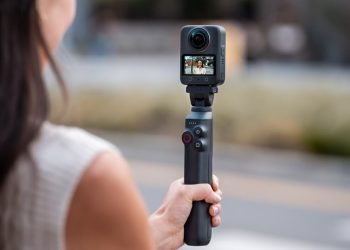
DJI’s first panoramic camera, the Osmo 360, brings familiar Action ecosystem logic to 360 shooting.
- Sensor: square 1-inch CMOS
- Video: native 8K panoramic, up to 30fps, ~13.5 stops dynamic range
- Color: D-Log M, 10-bit; over a billion colors for flexible grading
- Mounting: magnetic quick-release; compatible with Osmo Action accessories
- Perspective: “invisible” selfie stick for third-person shots
- Endurance: up to 100 minutes at 8K/30; fast-charge to 50% in ~12 minutes
- Weight: ~183 g
For creators, that combination means strong highlight retention at sunrise/sunset, clean night cityscapes, and robust color pipelines. The Osmo 360 aims to make 360 as gradeable as standard log footage—without bulky rigs.
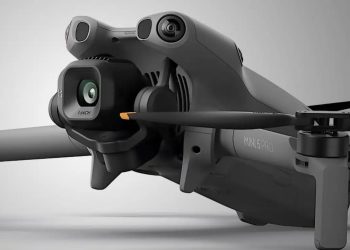
Insta360 Antigravity A1: Drones Meet 360—DJI vs Insta360 in the Air
Insta360 answered by launching Antigravity A1, an 8K panoramic aerial platform built around “flight and shooting separation.”
- Capture: dual panoramic lenses with 360-degree stitching
- Control: Vision flight goggles + Grip motion controller (head-tracking, gestures)
- Safety: visual obstacle avoidance, auto landing gear, payload detection
- Release: January 2026
- Weight: 249 g (travel-friendly)
The idea: capture everything in one flight, then reframe in post for multiple deliverables. That lowers reshoot risk and shortens production timelines. For travel, real estate, events, and action sports, the A1’s end-to-end workflow could be a force multiplier.
Category Convergence: What DJI vs Insta360 Signals
H3 — DJI vs Insta360 and the Creator Workflow
Both brands now optimize for the same pipeline: capture → stabilize → reframe → color → publish. DJI leans on its accessories and color science. Insta360 leans on post flexibility and reframing tools. Either way, creators get more usable shots per session.
H3 — DJI vs Insta360 and the 8K Future
8K may feel like overkill for delivery, but it’s perfect for reframing. Shoot wide, crop later, and still export sharp 4K. This is where both products shine—less worry about framing in the moment, more creative control in post.
Buying Guide: Which Launch Fits You?
- Choose Osmo 360 if… you’re a vlogger or travel creator who wants one camera to capture immersive scenes, then color-grade like a pro. You already own Osmo Action mounts or prefer DJI’s D-Log M pipeline.
- Choose Antigravity A1 if… you need aerial 360 capture with minimal piloting friction. You want to generate multiple shots from one flight—wide establishing views, cable-cam style passes, or follow-shots—all from the same source.
Practical Creator Use Cases
- Event coverage: Mount Osmo 360 on a pole for crowd-safe third-person views; reframe for reels and shorts.
- Travel films: Shoot sunrise cityscapes in 8K log; grade for dynamic skies without banding.
- Real estate & tourism: Fly A1 to capture a full property in one sortie; reframe for social + web tours.
- Action sports: Use invisible stick chases with Osmo 360; stitch drone 360 for overhead lines and hero passes.
The Broader IFA Context: DJI vs Insta360 in a Bigger Wave
IFA 2025’s theme—“Imagine the Future”—spotlighted AI, green tech, and smart living. Chinese firms dominated headlines with aggressive roadmaps. DJI and Insta360 weren’t alone. Giants like Haier, Midea, and TCL rolled out AI-powered appliances. Cleaning leaders Roborock and Dreame pushed smarter robotics. Lenovo and Honor teased creator-centric hardware. The message: hardware boundaries are blurring as software and AI reshape how we capture and edit.
What to Watch Next in DJI vs Insta360
- Software updates: expect faster stitching, better horizon lock, smarter object tracking, and AI reframing.
- Ecosystem play: batteries, mounts, ND filters, mic adapters, and creator apps will lock in users.
- Price positioning: if DJI undercuts on bundles, Insta360 may counter with aggressive creator kits—or vice versa.
- Regulatory shifts: sub-250 g airframes (like A1) help pilots fly more often with fewer restrictions in many regions.
Bottom Line
DJI vs Insta360 just became a headline rivalry. DJI’s Osmo 360 turns 360 capture into a color-grade-friendly tool. Insta360’s Antigravity A1 makes aerial 360 practical, light, and production-ready. For creators, that means better images, simpler workflows, and fewer retakes. For the industry, it’s a clear signal: the future of imaging is converged, AI-assisted, and creator-first.