

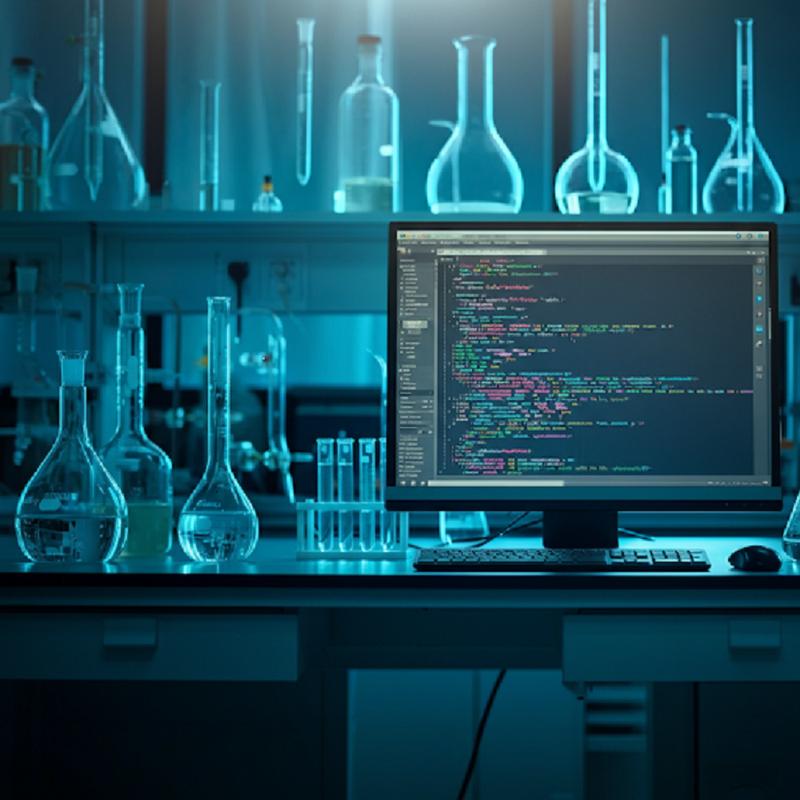
At MIT, researchers are teaching artificial intelligence to think more like chemists — and it could reshape the future of medicine.
The race to discover new medicines has entered a new era, and AI chemistry models are becoming one of the most powerful tools scientists have ever used. At the Massachusetts Institute of Technology, researchers are combining chemistry with artificial intelligence to tackle one of medicine’s biggest challenges: finding the right drug among an almost endless number of possible chemical compounds.
Leading part of that work is Connor Coley, an associate professor whose research sits between chemical engineering, computer science, and machine learning. His goal is simple in theory but enormously difficult in practice — teaching computers to understand chemistry the way human scientists do.
For decades, discovering new drugs has been a slow and expensive process filled with trial and error. Scientists estimate that there may be between 10²⁰ and 10⁶⁰ possible small-molecule compounds that could potentially become medicines. Testing all of them in laboratories would be impossible.
That is where AI chemistry models are starting to make a difference.
Instead of physically testing millions of compounds one by one, researchers can now use artificial intelligence to predict which molecules are worth studying first. These systems can analyze huge amounts of chemical data, identify patterns, and even suggest entirely new molecules that humans may never have considered.
Coley’s work focuses on making these AI systems more scientifically grounded. Rather than creating models that simply guess outcomes based on statistics, his team wants AI to understand the underlying logic of chemistry itself.
“We’re trying to give more of a medicinal chemistry intuition to the generative model,” Coley explained in an interview published by MIT News.
One of the lab’s most notable projects is a system called ShEPhERD, which evaluates how potential drug molecules might interact with target proteins inside the body. Pharmaceutical companies are already exploring the technology as they search for new treatments and therapies.
Another project, known as FlowER, predicts the products of chemical reactions by factoring in real scientific principles such as conservation of mass and reaction feasibility. According to the researchers, building those physical rules into the AI significantly improves accuracy.
What makes this work especially important is that it moves beyond simple automation. The aim is not to replace chemists, but to give them smarter tools that can dramatically reduce the time needed to discover useful compounds.
Coley’s path into this field reflects the increasingly blurred line between science and computing. Raised in a family filled with scientists, he developed interests in mathematics, chemistry, and programming early in life. While studying at the California Institute of Technology, he explored structural biology and computer science before eventually pursuing advanced research at MIT.
After earning his PhD, he briefly worked at the Broad Institute, where he gained additional experience in chemical biology and drug discovery before returning to MIT as a faculty member.
Today, his lab is part of a growing global movement focused on applying artificial intelligence to scientific discovery. Universities, pharmaceutical companies, and technology firms are investing heavily in AI chemistry models because of their potential to shorten research timelines and lower development costs.
Still, researchers acknowledge that AI is not a magic solution. Experimental validation remains critical, and human expertise continues to play a central role in drug development. But the ability to narrow down possibilities faster could save years of work and billions of dollars.
At MIT, that future is already taking shape.
Researchers believe the next generation of AI chemistry models will become even more capable of understanding molecular behavior, predicting reaction pathways, and designing compounds tailored for specific diseases. If successful, the technology could transform how medicines are discovered around the world.
And for patients waiting for new treatments, that transformation could arrive sooner than expected.