

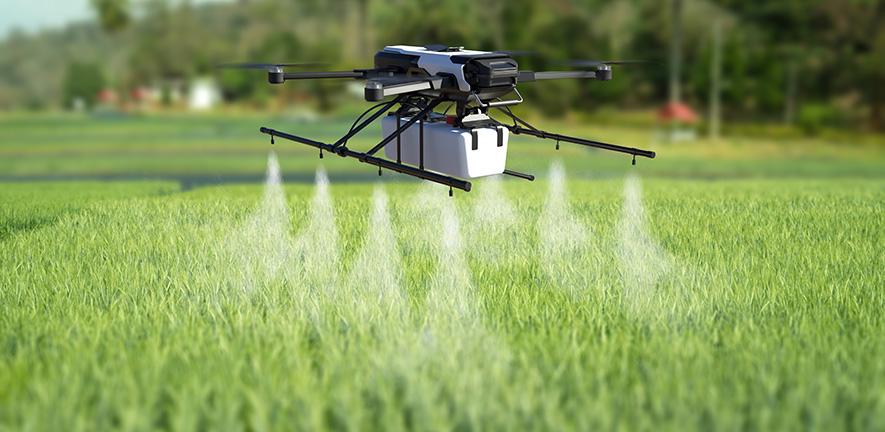
Farmers and researchers are beginning to use artificial intelligence to monitor birds, bees, insects, and ecosystems as regenerative agriculture expands worldwide.
AI farming tools are beginning to reshape how farmers understand the land beneath their feet. From tracking bees and birds to measuring biodiversity across crop fields, artificial intelligence is moving beyond tractors and automation and into one of agriculture’s most important conversations: how to farm while protecting nature.
Across farms in Europe and North America, researchers and agricultural startups are testing technologies that listen to bird songs, monitor insect activity, and map ecological changes in real time. Supporters believe these tools could help farmers make smarter environmental decisions while strengthening regenerative agriculture practices aimed at rebuilding soil health and biodiversity.
The growing interest comes at a time when scientists warn that Earth is facing a major biodiversity crisis. Agriculture remains one of the largest drivers of habitat destruction, freshwater use, and pesticide pollution worldwide. Yet farming also depends heavily on healthy ecosystems. Pollinators, birds, bats, and beneficial insects all play essential roles in crop production and pest control.
That contradiction is helping fuel demand for AI farming tools that can measure whether conservation efforts on farms are actually working.
How AI Farming Tools Work
Many of the newest systems rely on bioacoustics — technology that records and analyzes sounds in nature. Small devices placed around farms can identify bird calls, bat activity, and even the wingbeat frequencies of bees. Artificial intelligence software then processes the recordings and generates reports showing which species are present and how active they are.
Companies such as AgriSound and Mad Agriculture are already testing these systems on farms.
Mad Agriculture, for example, is studying how restoring prairie ecosystems on farmland affects bird populations across parts of the United States. Researchers are paying close attention to species such as bobolinks, whose return may signal improving ecosystem health.
AgriSound’s technology focuses on pollinators. Its devices listen to bee activity before and after farmers introduce regenerative practices such as pollinator strips, cover crops, and hedgerows. Farmers can then view heat maps showing where pollinator activity is strongest across their land.
For many farmers, that information matters because regenerative agriculture can require significant investments of time and money.
“Some of these interventions that people are making are expensive and time-consuming to maintain,” AgriSound founder Casey Woodward said in the report. “So, if people are going to do this, they want to know that it’s leading to some benefit.”
AI and the Push for Regenerative Agriculture
Regenerative agriculture has gained global attention in recent years as farmers search for ways to improve soil quality, reduce chemical use, and make farms more resilient to climate change.
But measuring environmental progress on farms has traditionally been slow, expensive, and labor-intensive. Researchers often spent days or weeks manually identifying species in the field. AI farming tools are changing that process dramatically.
Scientists say artificial intelligence can now analyze massive amounts of environmental data in hours instead of weeks. Some systems can even detect species that human observers might miss.
In Denmark, researchers involved in a project called VIBES are exploring how AI can standardize biodiversity monitoring across agricultural landscapes. The technology uses computer vision, camera traps, and machine learning to study insects and ecological activity on farmland.
Meanwhile, nonprofit organizations such as the Ecdysis Foundation are developing open-source AI systems to identify insect species collected from farms throughout the United States.
The Concerns Behind AI Farming Tools
Despite the excitement, many experts remain cautious about relying too heavily on artificial intelligence in agriculture.
One major concern is environmental cost. Advanced AI systems require significant energy and water resources, particularly during the training phase. Critics argue that using resource-intensive technologies to solve environmental problems can create its own contradictions.
Others worry about privacy and data ownership.
Modern farms already generate enormous amounts of data, and some researchers fear that agricultural technology companies could eventually use farmer data for commercial advantage. Questions also remain about who truly benefits from AI farming tools — farmers, conservation efforts, or technology companies.
Some experts also caution that technology should not replace human observation and ecological understanding.
“AI is a tool, not an end,” Danish biodiversity specialist Machteld Verzijden said, emphasizing the continued importance of spending time in nature and observing ecosystems directly.
The Future of AI Farming Tools
Even with the concerns, many researchers believe AI farming tools could become increasingly valuable as agriculture adapts to climate pressure and environmental decline.
The technology is still in its early stages, and adoption remains limited. But supporters argue that giving farmers faster, more accessible biodiversity data could help accelerate the transition toward more sustainable farming systems.
For regenerative farmers, the appeal is simple: understanding whether efforts to restore nature are truly making a difference.
And in a world facing growing ecological challenges, that knowledge may become one of agriculture’s most valuable resources.