

By 2026, fifth-generation mobile technology will no longer be a novelty. Instead, it will form the backbone of a rapidly evolving digital ecosystem that supports new applications, industries, and ways of living. As 5G networks mature and research into next-generation connectivity accelerates, the conversation is shifting from simple speed improvements to transformative use cases and broader technological convergence.
This article examines 5G and emerging tech trends in 2026, focusing on how advanced connectivity is reshaping industries, enabling innovation, and laying the groundwork for technologies that go beyond 5G.
The Maturation of 5G Networks
In 2026, 5G coverage is expected to be more widespread and stable across major cities and many rural areas globally. Early deployment challenges such as limited coverage, device compatibility, and high costs are gradually easing as infrastructure investment increases and technology matures.
Network operators are focusing on improving reliability, reducing latency, and expanding capacity. These improvements allow 5G to move beyond consumer smartphones into industrial, enterprise, and public-sector applications.
5G as the Foundation for Digital Transformation
Rather than being a standalone innovation, 5G acts as an enabler for multiple emerging technologies. Its ability to handle massive data volumes, connect millions of devices, and deliver near-instant response times makes it central to digital transformation strategies.
In 2026, industries are increasingly designing solutions with 5G as a core requirement rather than an optional upgrade.
Artificial Intelligence Meets Advanced Connectivity
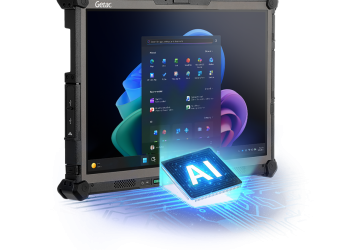
One of the most significant trends is the deep integration of artificial intelligence with 5G networks. AI-driven network management enables predictive maintenance, traffic optimization, and automated fault detection.
For businesses, this combination allows real-time analytics and decision-making at the edge of the network. Applications such as smart manufacturing, autonomous systems, and intelligent logistics rely on this convergence to function efficiently and safely.
Expansion of the Internet of Things
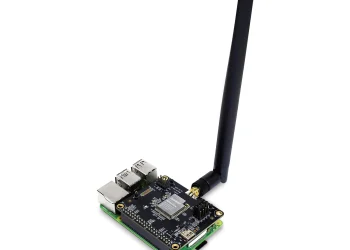
The Internet of Things continues to grow rapidly in 2026, powered by more capable and affordable 5G connectivity. Unlike earlier networks, 5G supports massive machine-type communication, allowing millions of sensors and devices to operate simultaneously.
Smart agriculture uses connected sensors to monitor soil, weather, and crop health. In cities, IoT devices manage traffic flow, energy usage, waste collection, and public safety. These systems depend on reliable, low-latency networks to deliver real-time insights and automation.
Smart Cities and Digital Infrastructure
Smart city development is one of the most visible outcomes of advanced connectivity in 2026. Governments are leveraging 5G to improve service delivery, urban planning, and citizen engagement.
Connected surveillance systems, intelligent transport networks, and digital public services rely on high-speed connectivity to function effectively. By enabling real-time data sharing between systems, 5G helps cities become more efficient, safer, and environmentally sustainable.
Extended Reality and Immersive Technologies
Extended reality, including virtual reality and augmented reality, benefits significantly from improved network performance. In 2026, immersive technologies are increasingly used in training, education, healthcare, and entertainment.
Low latency and high bandwidth allow real-time interaction without motion lag, making experiences more realistic and practical. From remote medical consultations to industrial training simulations, immersive applications are becoming mainstream.
Edge Computing and Decentralized Processing
Another key trend is the rise of edge computing. Instead of sending all data to centralized cloud servers, processing occurs closer to the user or device. This reduces latency, improves performance, and enhances data security.
5G enables edge computing by providing the necessary bandwidth and responsiveness. In 2026, many applications—from autonomous vehicles to smart factories—depend on edge processing to operate in real time.
Cybersecurity in a Hyper-Connected World
As connectivity expands, cybersecurity becomes more complex and critical. In 2026, the growing number of connected devices increases the potential attack surface for cyber threats.
Emerging security approaches focus on zero-trust architectures, AI-driven threat detection, and network slicing to isolate sensitive operations. Protecting data and infrastructure is a top priority as societies become more dependent on digital systems.
Looking Beyond 5G
While 5G continues to evolve, research into next-generation connectivity is already underway. Early discussions around future network standards focus on even lower latency, higher energy efficiency, and deeper integration with AI.
These future networks aim to support applications that are currently experimental, such as advanced holographic communication and fully autonomous systems. Although widespread deployment remains several years away, 2026 represents an important transition phase toward what comes next.
Economic and Social Implications
The economic impact of 5G and emerging technologies in 2026 is significant. Industries benefit from increased productivity, new business models, and enhanced global competitiveness. At the same time, societies face challenges related to digital inclusion, workforce reskilling, and ethical use of technology.
Ensuring that the benefits of advanced connectivity are broadly shared remains a critical policy and business concern.
Conclusion
The year 2026 marks a pivotal moment in the evolution of connectivity. 5G and emerging tech trends are no longer about raw speed but about enabling intelligent systems, real-time decision-making, and digital transformation across sectors.
As networks mature and new technologies converge, 5G becomes the foundation upon which future innovations are built. Organizations and governments that understand these trends and adapt early will be best positioned to thrive in a world shaped by advanced connectivity and the technologies that go beyond it.